Jaloni’s 475 Hospital Days Show the Human Cost of Children Waiting for Care
After a spinal injury, Jaloni spent more than 475 days in a children’s hospital as his family searched for a safe, accessible home.
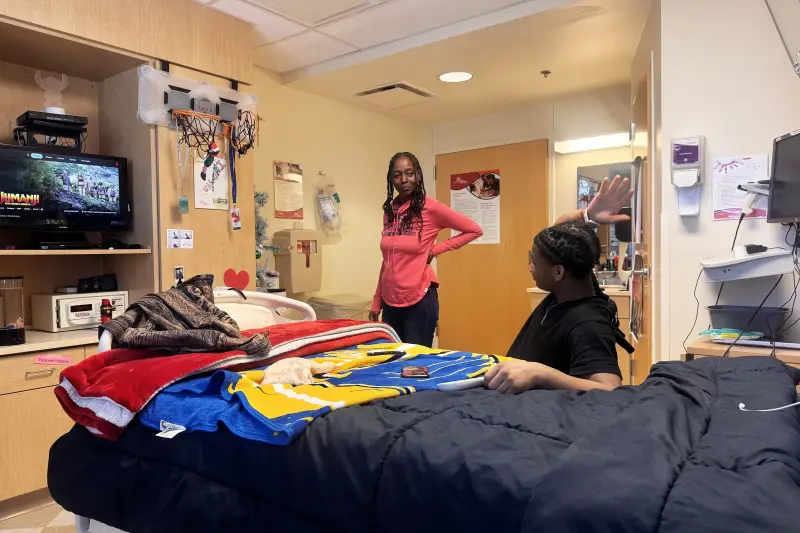
For Jaloni, a children’s hospital became home because his family couldn’t find a safe place to care for him after a spinal injury left him using a wheelchair. Across more than 475 days in the hospital over three years, his story shows how a shortage of suitable placements can turn a medical stay into a long wait for housing and support.
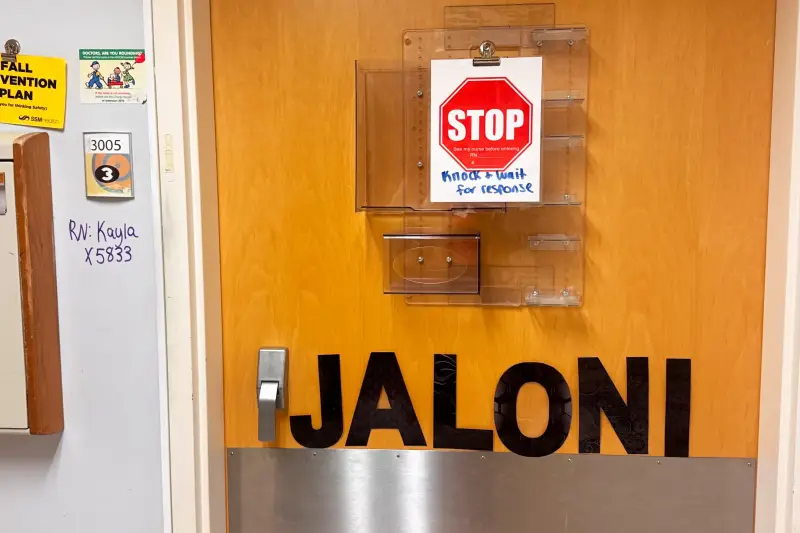
Jaloni, now 18, asked that only his first name be used to protect his family. His time at SSM Health Cardinal Glennon Children’s Hospital in St. Louis included three separate stays. Some days were for treatment; others came while adults worked out where he could live and who could safely care for him. His records don’t show how many days were beyond his medical needs, or what those extra days cost.
This kind of prolonged hospital stay is often called a social stay or hospital boarding: a child remains in a medical facility after hospital treatment is no longer the main reason they’re there. Children who need mental health support, ongoing physical care or disability accommodations can be especially hard to place when suitable foster homes are scarce.
A discharge that didn’t last
Jaloni’s first stay began in June 2023, when he was 14. Bullets had struck his right arm and the right side of his chest, passing through his torso. He remembers the pain as overwhelming. Strong medication left him feeling as if he were flying in a dream, but in the room he could barely move.
He was relieved to be alive. Death had already touched his family: his older sister and 17-year-old brother had both died after being shot, as had several cousins around St. Louis. Jaloni recalled violence continuing around him: “It was a lot of dying going on. People were dropping like flies.”
That summer, a gunfight in his community left Jaloni injured and a 22-year-old dead. He later described how his thinking changed with age: “I felt like I was Superman with my gun. But when you get older, you realize that it’s just stupid.”
Doctors treated his wounds and a spinal cord injury. After three weeks, he went to a rehabilitation facility, then home. He needed a wheelchair, and caring for him proved too much for his mother and grandmother to manage safely.
His grandmother, who had been his legal guardian since he was young, was a double amputee and also used a wheelchair. His mother, Quette, worked as a paid caregiver for another family while trying to care for Jaloni. His needs included wound care, meals, cleaning and being turned every four hours to help prevent bedsores.
“I just couldn’t take care of him anymore,” Quette said. “It was something that I was not ready for.” She said she repeatedly asked hospital staff for help. By November, Jaloni was sick and weak, with bedsores and what seemed to his family to be an infection. They called for emergency help, and he returned to Cardinal Glennon less than five months after leaving.
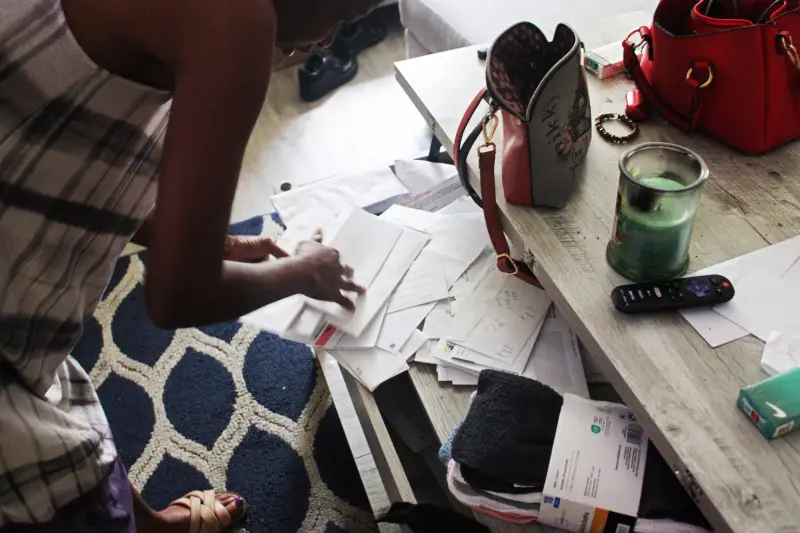
Quette recalled being told, “Well, y’all almost killed him.” The family faced an accusation of neglect, and Jaloni became a ward of Illinois, where they lived across the river from St. Louis. He could no longer return to his mother and grandmother’s home while a new placement was arranged.
His family considered relatives who might help. A social worker raised the possibility of a home in Chicago that could provide the care he needed. Jaloni didn’t want to move 300 miles away. He wanted to go home, so he stayed in the hospital while the adults searched for a workable plan. That second stay lasted 250 days.
Finding a home that could meet his needs
Jaloni hadn’t expected the wheelchair to make finding a place to live so difficult. A suitable home needed an accessible entrance, enough room for medical equipment and medicines, and someone able to provide care safely. Those requirements narrowed the options for a teenager who had suddenly acquired substantial support needs.
The challenge reaches far beyond one family. In the fiscal year ending in June 2025, Illinois’ child welfare department counted 304 young people staying in psychiatric hospitals beyond medical necessity. Another 312 spent more than 24 hours in hospital emergency departments while waiting for a safe place to go. In Missouri, 648 young people in state custody were boarded in hospitals during the fiscal year that ended in June.
Missouri has spent more than $64.7 million over five years on hospital stays for children in state custody who had nowhere else to go, according to state records. The Missouri Hospital Association’s Dave Dillon said the reported amount substantially understates the problem because hospitals don’t always have staff available to document these stays and request reimbursement.
A Minnesota study estimated that boarding a child with a complex medical condition cost about $3,932 per day in 2017. That figure gives a sense of the expense, but it doesn’t establish the cost of Jaloni’s additional hospital days. SSM Health declined to discuss his case. Spokesperson Liz Sharpe-Taylor said the health system is committed to serving people in need and that hospitals often bear extensive unpaid costs when patients can’t be discharged because no placement is available.
Those figures capture only part of the strain. A hospital can provide medical supervision, but a prolonged stay can also mean isolation, disrupted routines and limited contact with life outside the ward. Jaloni’s family had to solve both the practical problem of accessible housing and the personal question of who could take responsibility for his day-to-day care.
His grandmother had been the person who made him feel safe. She taught him to cook his favorite meal, fried tilapia with spaghetti, kept him company and protected his secrets. She died in 2024 while he was in the hospital.
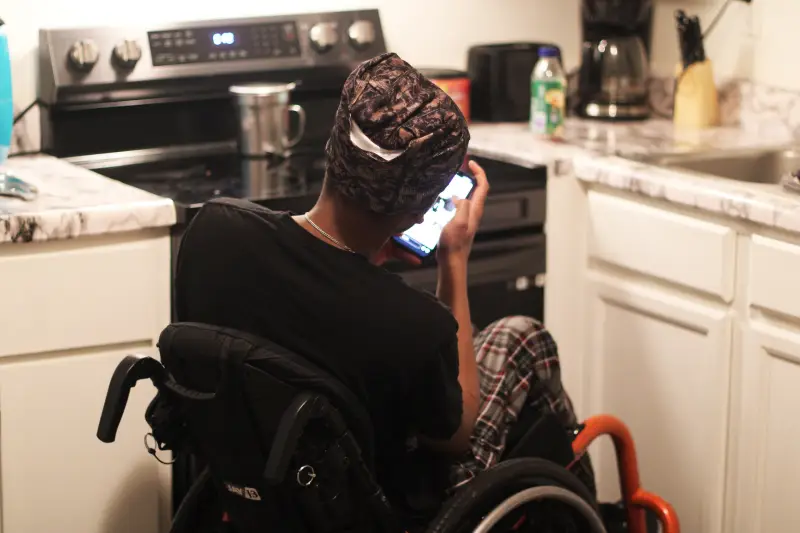
His aunt Deborah, whom he calls Tete, agreed to become his foster parent. Jaloni had lived with her as a baby, but bringing him into her home now required a major change. She moved into a first-floor, one-bedroom apartment with a wheelchair ramp, and the household needed a specialized hospital bed. Jaloni remained in the hospital while she prepared to receive him.
Staff members tried to make the wait less lonely. They brought him gifts and braided his hair. A hospital teacher visited five days a week to help with online high school classes. Still, the time felt empty to Jaloni. “If you’re in the hospital for a whole year just doing nothing, it’s going to be the worst year of your life,” he said. “I was mad I was in there for so long.”
A hospital room becomes a small world
By his third hospital stay, which began in October 2025 to treat a bone infection, Jaloni had learned the rhythms of the building. He played Fortnite at the nurses’ station, sometimes ate in the cafeteria and occasionally went outside for fresh air. Staff moved him to a different room every 30 days to allow deep cleaning and help him avoid feeling confined. He said he slept in nearly every room on the third floor.
Room 3005 was where he had first arrived after being shot. Staff wondered whether returning there would bring back difficult memories. Jaloni saw the room differently: “Some people think it’s like a trauma room, but it’s a good room for me,” he said, pointing to “how much I accomplished since that day.”
Over time, familiar faces helped make the hospital feel less impersonal. Nurses, a custodian and a cook looked out for him. Jaloni listened to staff talk about their relationships and plans, and joked that he had become a therapist. He also learned about the hospital morgue, a place he knew patients couldn’t visit. A 13-year-old girl who died there had made him a bracelet; a nurse brought it to him.
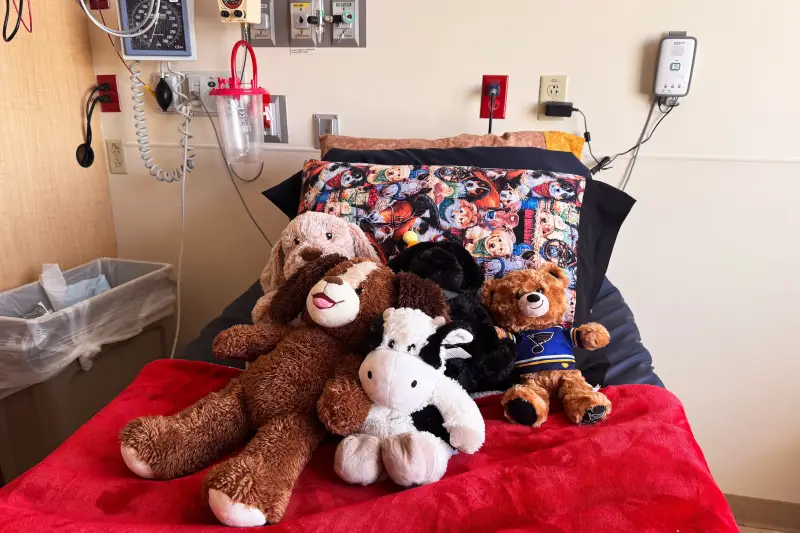
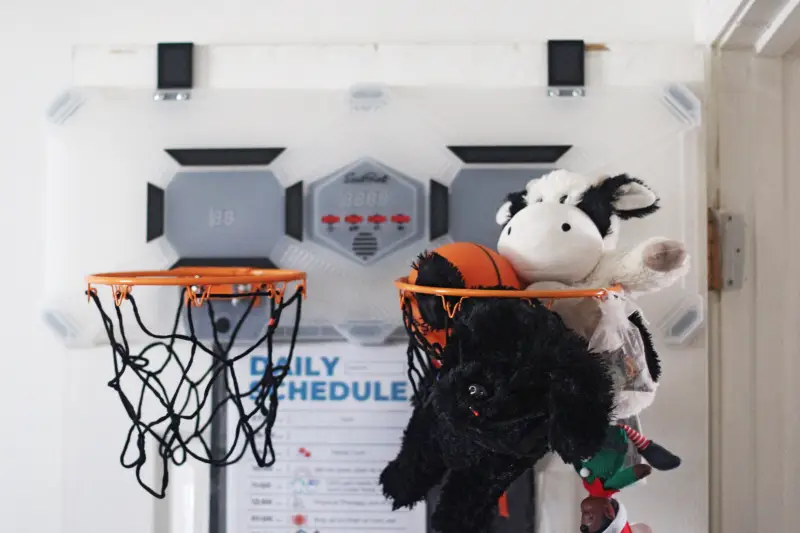
His room collected reminders of the life he was missing: Halloween decorations, Christmas presents and Valentine’s Day treats. Stuffed animals kept him company. Bruno, a stuffed dog, was his favorite; another was called Snoop. A small tank of plastic neon fish lit up at the push of a button. “This is my kingdom,” he said. “I’ve got a good mindset.”
That confidence existed alongside loneliness. “I don’t make friends,” Jaloni said. “I don’t have any friends.” When his door was open, he could watch the activity on the hospital floor. One Friday in April, he said he heard gunshots outside. A 15-year-old boy who had been shot nearby later received treatment on the same floor. Jaloni said he felt safer inside the hospital than outside it.
Small choices gave him some control over daily life. After telling a cook that the food “could be better,” Jaloni was able to ask for special meals, including lemon pepper wings with cheese fries, Philly cheesesteaks topped with crushed Doritos and meat lover’s pizza with a tortilla-shell crust. A hospital worker gave him an air fryer so his fries could stay crisp. His aunt brought his favorite meal from a nearby restaurant when she could: cheese fries, six chicken wings and a lemon-lime soda.
In March, his doorway looked more like a teenager’s private space than a hospital entrance. Black letters spelled his name, and a sign asked visitors to knock and wait. He kept photos on his bathroom door, including one of his brother, and grooming products beside the sink. For a spring prom organized by hospital staff for current and former patients, he watched a video tutorial to learn how to tie a necktie. His cousin styled his locs, and Deborah joined him for the dance. It was her first prom, too.
Those gestures made his days brighter, but they couldn’t erase the limits of a hospital life. Jaloni said many children in similar situations don’t have private rooms, special meals, tutoring, outdoor time or the same level of attention. Even with those supports, his world remained narrow.
Learning to live outside the hospital
Jaloni was discharged in May after Deborah found a larger, two-bedroom apartment. She gave him the bigger bedroom, with enough room for his bed and wheelchair, and put a homemade ramp outside. After rotating through hospital rooms for months, he had a space of his own.
His mother visited and helped make his bed. He showed her a pair of white Nike Air Force 1s tucked in a box and the prescription bottles on a shelf under the television. Keeping track of his medicines is now his responsibility. He’s also learning to cook, using the air fryer to make meals while his aunt is at work.
At 18, Jaloni is working toward everyday independence. Deborah quietly celebrated the first time he took out the trash. At first, she said, he wouldn’t go outside. He still spends much of his time indoors. Crowds make him anxious, and fear of violence affects when and how he goes out. He often waits until dark and wears a black hoodie, hoping not to draw attention.
His aunt is supporting him as he adjusts, while also balancing work and her own health. Jaloni has goals of earning his GED, learning a trade and starting a business. Reaching them will take time; for now, he is learning to manage his medicines, prepare food and take on more tasks at home.
Jaloni’s stay shows what happens when a child’s discharge depends on finding accessible housing and a caregiver able to meet complex needs. His hospital team could help him heal and make a long stay more bearable, but a room full of familiar people and stuffed animals could not replace a home. After more than 475 hospital days, his next step is building a life outside it, one task at a time.