Medicaid Expansion Faces New Funding and Enrollment Hurdles in Four States
More than a million people could gain coverage, but new funding limits, work rules and statehouse divisions complicate expansion plans.
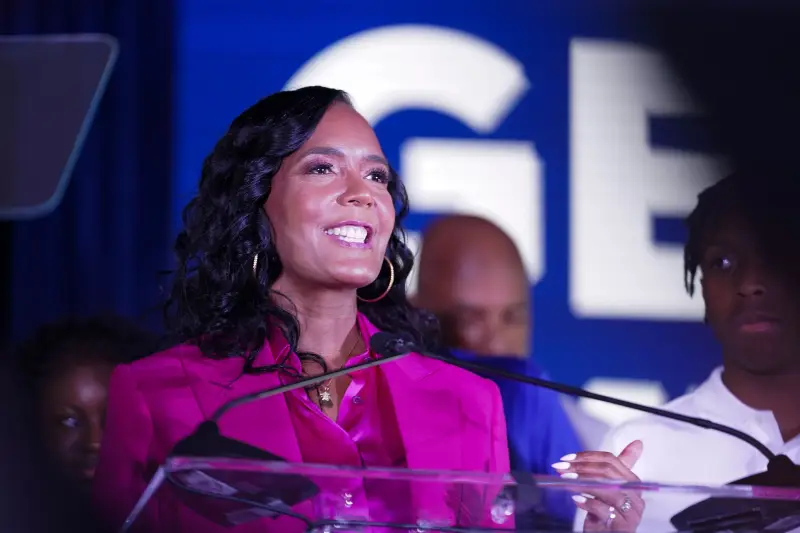
Medicaid expansion could reach more than a million people across Georgia, Kansas, Texas and Wisconsin, but the path to broader coverage has grown more complicated. New federal funding limits and monthly work rules add costs and administrative demands just as incoming Democratic governors try to win support in states with long histories of resisting full expansion.
The incoming governors — Keisha Lance Bottoms in Georgia, Cindy Holscher in Kansas, Gina Hinojosa in Texas and David Crowley in Wisconsin — have all backed expanding Medicaid. KFF’s 2024 estimates put the number who could gain coverage in these four states above one million.
Forty states and Washington, D.C., have adopted full expansion under the Affordable Care Act. North Carolina was the most recent, expanding in 2023. Georgia and Wisconsin have partial programs that cover some people who would qualify under full expansion, while Texas and Kansas have not adopted it.
Expansion now comes with a tougher financial calculation
Under the expansion option, states receive a higher federal matching rate for people in the expansion group than for other Medicaid enrollees. Broader coverage can also reduce the burden of unpaid care on hospitals, including facilities in rural communities. Those benefits have helped build support among health providers and local leaders concerned about hospital finances.
But states still have to fund their share of the added coverage. A budget law enacted last year removed a financial bonus that had encouraged states to expand. It also restricted how much federal funding states can draw through provider taxes to support doctors and hospitals treating large numbers of Medicaid patients. The limits are tighter for states that fully expand.
Wisconsin faces a particularly difficult trade-off. The Wisconsin Hospital Association estimates that full expansion could put hundreds of millions of federal dollars flowing into the state at risk. Bobby Peterson, a Madison attorney who helps clients navigate benefit programs, said that even with Democrats set to control the governor’s office and both legislative chambers starting in January, the funding questions will make expansion difficult. “These are going to be hard conversations,” he said.
Crowley supported full expansion earlier in his campaign, then proposed letting anyone buy into the state’s partial Medicaid program. Since his win, he has moved further from full expansion. His spokesperson, Jonathan Fera, said Crowley would share more about his agenda after his inauguration. The direction matters: different approaches to widening access could carry different funding consequences under the new limits.
Lawson Mansell, a senior health policy analyst at the Niskanen Center, described the financial questions as “a lot of complicated math.” States must weigh the higher match for expansion enrollees against their share of costs and the possibility that the revised funding restrictions could reduce other federal support.
Work rules add another layer
The same budget law requires affected enrollees to document at least 80 hours a month of work or other qualifying activities. That requirement complicates expansion planning: states would need systems to explain the rules, collect proof and determine whether people meet them. Administrative burdens can also keep eligible people from completing enrollment.
Georgia’s limited expansion program has already faced enrollment problems tied to paperwork for similar work rules. That program is set to expire at the end of the year. States that have expanded Medicaid are also struggling to prepare for the new requirements.
On Nov. 13, the White House allowed states to delay the rules, originally scheduled to begin Jan. 1, by six months. The pause offers extra time, but it does not resolve whether the requirements will remain in place or how states should build them into coverage plans. Democrats have pledged to reverse Medicaid cuts in the budget law but have not explained how, and the president’s position is uncertain.
That uncertainty makes long-term planning harder. Brian Blase, president of the Paragon Health Institute, said changes in federal direction make it more difficult for states to legislate. Edwin Park, a research professor at Georgetown University’s Center for Children and Families, warned that paperwork could leave people uninsured even if a state adopts expansion.
Statehouse support will shape what happens next
Texas illustrates the competing coverage choices. More than 4 million people in the state selected Affordable Care Act marketplace plans for 2026, according to KFF. Opponents of Medicaid expansion have argued that eligible people should remain in private marketplace coverage instead of joining Medicaid. Former Democratic U.S. Rep. Beto O’Rourke expects expansion to be a priority for Hinojosa, citing her legislative work and the Texans she met who lacked health coverage.
Yet Texas Republicans will retain control of the state Senate, despite Democrats winning the governor’s office and a majority in the state House. John Henderson, head of the Texas Organization of Rural & Community Hospitals, doubts Senate Republicans will change their longstanding opposition. He said the House has shown some interest, but the Senate has not.
Kansas presents a different legislative obstacle. Holscher will replace Democratic Gov. Laura Kelly, whose expansion efforts were blocked. Republicans retained control of both legislative chambers, although Democrats ended the Republican supermajority in the House. April Holman, executive director of the Alliance for a Healthy Kansas, said the additional Democratic seats could give expansion supporters more room to reopen discussions. The Holscher campaign did not provide details on how she would pursue the issue with both chambers under Republican control.
The central question for all four states is whether the coverage gains and hospital benefits can outweigh new fiscal risks and enrollment demands. For residents, the near-term signal to watch is whether governors and legislators settle on a specific expansion design, explain how the state share would be paid and show how eligible people could meet any work rules.