Group Health Open Enrollment: What Texas Practices Should Review for 2026
With Texas family premiums at $25,053 in 2025 and small-group increases proposed for 2026, practices can use open enrollment to review costs and coverage.

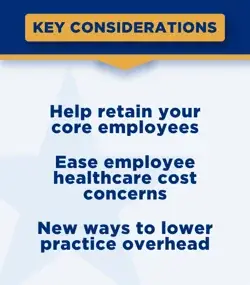 For independent medical practices, a group health plan affects both operating costs and the ability to keep experienced staff. Open enrollment gives practice owners a chance to check whether their current coverage still balances employee needs with the practice’s budget, especially as premiums rise.
The financial pressure is measurable. In Texas, the average annual premium for family coverage reached $25,053 in 2025, of which employees paid $7,913. Insurers in the ACA-compliant small-group market proposed a national median rate increase of 11% for 2026. The Texas figure describes 2025 costs; the 11% figure is a proposal for 2026, not a reported final increase.
Benefits can influence who stays
Health coverage is one part of an employee’s overall compensation, but it can carry particular weight for people weighing whether to remain in a job. Research cited in connection with employee benefits found that roughly 72% of employees identify health coverage as a decisive factor in deciding whether to stay or leave. A separate 2024 WTW finding reported that 36% of U.S. workers named health benefits among the top reasons they stayed with their employer.
For a practice, staff departures can interrupt familiar working relationships with patients and add duties for the remaining team. That makes benefits relevant to workforce stability as well as the compensation budget. The figures don’t guarantee that a richer plan will retain any particular employee, but they suggest that coverage belongs in the conversation when a practice reviews how it supports its team.
Employees commonly assess a plan by looking at what they may pay themselves and whether the plan’s network and benefits fit their care needs. Premium contributions are only one part of that calculation. Deductibles and other out-of-pocket expenses can affect the value employees see in a plan, while access to providers matters when someone needs care. A plan that appears affordable to the practice may still leave employees with costs or network limits that make it less useful to them.
Compare the cost with what the plan delivers
Higher premiums can squeeze practice revenue and leave less room for other operating needs. Employees can also feel the pressure through their share of premiums and other costs for care. If benefits become less attractive, the practice may face a harder task recruiting clinical and administrative staff.
Open enrollment is a useful point to examine these pressures together. Start with the plan’s renewal terms and the cost paid by the practice and its employees. Then look at deductibles, other out-of-pocket expenses, and the provider network. A year-over-year premium change is important, but it does not show on its own whether the coverage remains a good fit or what employees will pay when they use it.
Practices can also ask whether an alternative funding arrangement is available and suitable for their group. One option raised in the source material is a level-funded health plan. For qualifying groups, this kind of arrangement may return unused claim dollars. Eligibility and plan terms matter, so any potential return or cost reduction needs to be assessed for the specific group. The available information does not establish that level funding will lower costs for every practice.
Use renewal to get specific answers
A focused review can help owners and office managers answer practical questions before enrollment closes:
- Employee costs: How do the premium contribution, deductible, and other out-of-pocket expenses affect the team?
- Access to care: Does the network include the providers employees need, and do the benefits fit their circumstances?
- Practice spending: How does the renewal cost compare with the coverage being provided?
- Plan structure: Is another funding model, including level funding, available to the group, and what conditions apply?
These questions connect the plan’s price to its practical value. They can also give the practice a clearer basis for comparing renewal terms with other available options. A broker or benefits advisor can help explain those options and plan conditions; practice owners should check what services are offered and how the advisor is compensated.
For Texas practices reviewing group health coverage, the key is to make the decision with current costs and employee expenses in view. Check the renewal details, consider how the plan supports access to care, and compare any alternatives that are available to the group. That review can help owners judge whether their health benefits and budget remain aligned as the next enrollment period approaches.