Smart Knee Implants Raise Questions About Consent, Privacy and Health Costs
Connected knee implants can collect recovery data, but patients may not understand the technology, its costs or whether monitoring improves care.
A connected knee implant can turn routine recovery measurements into a new stream of health data—and a new source of cost. But patients may not know they’ve received a device with wireless features, and clinicians still lack strong evidence that monitoring improves outcomes compared with a conventional implant.
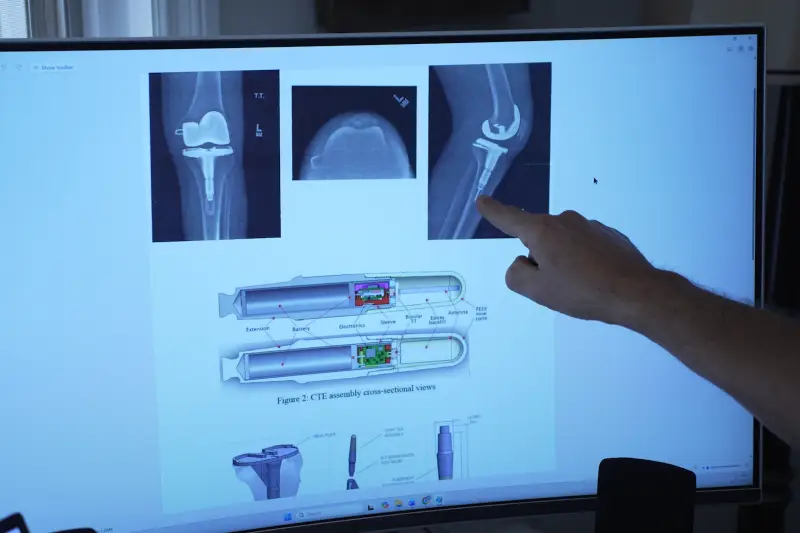
That gap is at the center of questions raised by two California patients who say they weren’t properly informed about Zimmer Biomet’s Persona IQ knee. The implant contains a battery, sensors and a transmitter. If a patient authorizes an account, it can send information about walking and joint movement to the patient’s care team and Zimmer. The technology’s promise is more visibility into recovery. Its practical value, and the clarity of consent, remain contested.
Patients say the connected features came as a surprise
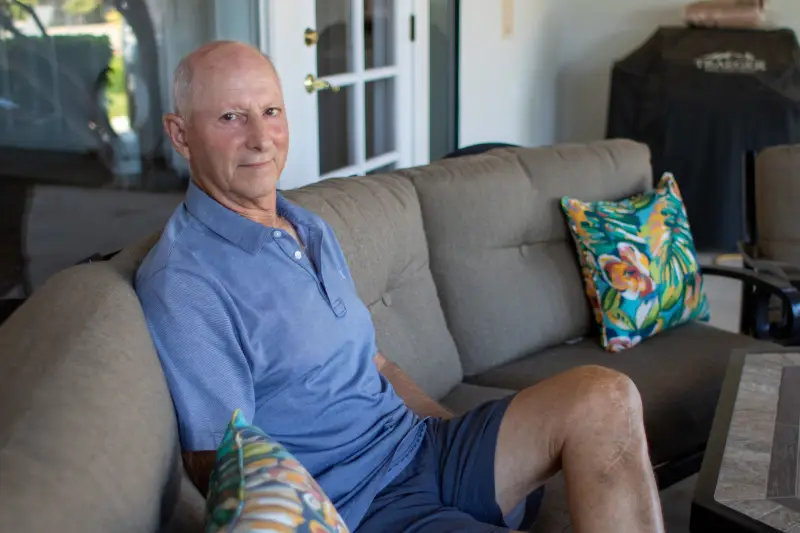
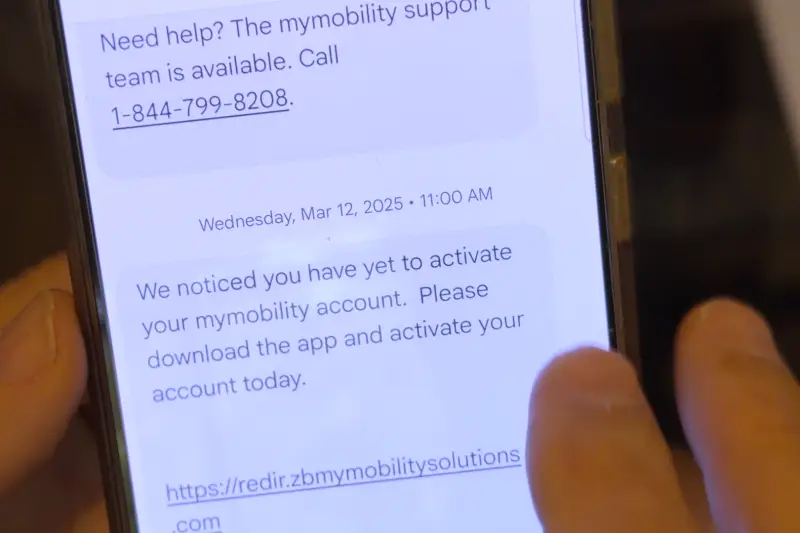
Steve Russak, 70, of Santa Rosa Valley, California, says he learned about the connected features only after knee replacement surgery last year. He woke to a text from Zimmer Biomet, followed by four more messages over the next few days asking him to use an app. He didn’t understand what the messages meant. A company representative later called to help set up accessories, Russak said. “I said, ‘What? I don’t know what you’re talking about.’”
Russak says he did not want to activate data collection, in part because of privacy concerns. He also says the implant has affected his ability to get an MRI because of compatibility issues. His Medicare account shows payment for the surgery and implant, but no claims for remote monitoring; he has not set up the device to transmit data.
Russak is pursuing a lawsuit against his doctor, Zimmer and Canary Medical, which helped develop the implant. His complaint describes the placement as unauthorized and alleges he should have had the chance to decline the device or opt out of data collection. He continues to raise an informed-consent claim after dropping allegations of fraud and breach of fiduciary duty against the doctor. The doctor has not responded to the complaint in court. A hearing was scheduled for December.
Zimmer and Canary deny the allegations in their initial responses. They also argue, among other defenses, that any damages resulted from another party or from consequences that could not reasonably have been anticipated. The doctor and the doctor’s attorney did not respond to requests for comment, and Canary did not respond either.
Zimmer spokesperson Troy Kirkpatrick declined to discuss the lawsuits. He said nearly 90% of surveyed patients who received Zimmer joint replacements would choose an orthopedic device with remote monitoring again. He also said data transmission requires patient authorization during account setup and is intended to support recovery care and communication between patients and surgeons.
A second patient, Jodi Murphy of Contra Costa County, also sued Zimmer, Canary and her doctor after receiving a Persona IQ implant and being registered to use Zimmer’s app. Her complaint says the device was used without disclosure or her specific consent. Her doctor and practice deny the allegations. Zimmer’s attorneys say the company does not provide medical care and had no duty to obtain consent for treatment provided by a physician. A hearing was scheduled for February. Murphy and her lawyer declined to comment.
Russak’s complaint says his doctor told him he had not explained the implant’s electronic features, wireless transmission or data collection to earlier patients who received the same device. Russak says he doubts the manufacturers adequately trained doctors about those features. Those claims remain allegations, rather than findings about what happened in either patient’s care.
More data brings questions about value
Persona IQ is part of a wider growth in connected medical products, from implants to external blood-pressure monitors. These devices can report measurements to clinicians. In principle, that information can help a care team spot a change, such as a patient becoming less active after surgery or a person’s glucose moving outside a desired range.
The hard question is whether the extra information leads to better care. Sanket Dhruva, a cardiologist and digital-health researcher at the University of California, San Francisco, sees potential in remote monitoring but says stronger evidence is needed to show whether the data helps patients recover. That matters for both patients and health plans: clinical professionals can bill for reviewing remote-monitoring information, so more monitoring can mean more spending even when the benefit is uncertain.
Kevin Bozic, an orthopedic surgeon and chair of surgery and perioperative care at the University of Texas at Austin, reviewed research on the Zimmer device. He said the studies he examined did not compare Persona IQ with a conventional knee implant. Surgeons he knows are ambivalent about smart knees, and many don’t use them.
Measurements such as step counts and range of motion could help a clinician notice a change in a patient’s activity, Bozic said. But he sees the feature as useful in some circumstances rather than essential to the operation. Surgeons already follow up with patients and ask them to report changes in their health, he said. Adding monitoring to the implant could add cost without a clear improvement in outcomes.
Zimmer describes Persona IQ as a way for care teams to monitor and personalize a patient’s experience and improve practice efficiency. The company’s materials also say the implant is not intended to support clinical decisions and has not been shown to provide a clinical benefit. Zimmer discusses potential payments to surgeons for remote monitoring as well. Those points sharpen the question for patients and clinicians: what specific care decision is the extra data meant to support?
Remote monitoring has become a sizable expense
Medicare and private insurers reimburse clinical professionals for reviewing data from connected devices. Nearly 1 million Medicare beneficiaries received remote patient monitoring services in 2024, and Medicare paid providers $536 million for them—more than twice its spending three years earlier. About 300,000 adults with employer-sponsored insurance had at least one remote-monitoring claim in 2023.
Those figures cover remote monitoring broadly, not just connected knee implants. They show how quickly a service can add to health spending as it spreads across different conditions and devices. Whether that spending is worthwhile depends on what the monitoring changes in care, how patients are enrolled and whether the billed services are actually delivered.
A review of Medicare’s remote-monitoring services found that about 43% of patients in 2024 did not receive the full set of services defined for the program. That set includes instruction on using the device and review of data for health changes. The review also raised concerns about companies contacting people unsolicited to offer devices they may not need. Medicare has proposed reducing some payments. Its spokesperson said payment for a device doesn’t mean Medicare endorses a company’s marketing claims or guarantees a benefit for every patient.
The way a product is paid for can also affect future costs. Persona IQ received a temporary Medicare add-on payment intended to support adoption of new technology; that extra payment ended in fall 2024. Such subsidies can influence procedure costs, and procedure costs help shape the average costs used in later reimbursement calculations. Dhruva says that can leave manufacturers with a longer-lasting benefit from a temporary payment.
A change to the add-on payment rules also widened the pool of eligible products for a period. A 2025 study reported an average of four approvals per year in the nearly decade before a 2020 change, compared with nearly 15 annually over the following four fiscal years. The payment program has since been adjusted. Dhruva says the wider issue is whether payments are supporting services and devices with demonstrated value.
Consent and privacy need to be part of the decision
Data collection raises a separate concern: patients may not understand what information is gathered, who receives it or how it may be used. Kate Black, a health-data privacy lawyer not involved in the two cases, says consent standards should be high for an implant that may remain in someone’s body for years. An implanted sensor differs from a wearable in one practical respect: leaving it behind isn’t as simple as taking off a device.
Connected equipment can also have consequences beyond the initial procedure. In an earlier example involving CPAP machines, insurers monitored whether patients used the equipment and denied coverage for replacement supplies such as masks to some patients who did not. That example illustrates why patients may want a clear explanation of what a device records and whether the information could affect their coverage or access to supplies.
For a patient considering a connected implant, the useful questions are concrete: What does the device measure? Is information transmitted automatically, or only after setting up and authorizing an account? Who can see the data? What happens if the patient declines monitoring? Could the implant affect access to other care, such as an MRI? And what evidence shows that monitoring changes treatment or recovery?
The smart-knee debate is not settled by the fact that a device can collect data, or by the fact that some patients value remote follow-up. The practical test is whether the information improves care enough to justify its costs and privacy trade-offs. Until better comparisons are available, clear disclosure before surgery—and a patient’s understanding of the device’s connected features—remain central to making an informed choice.